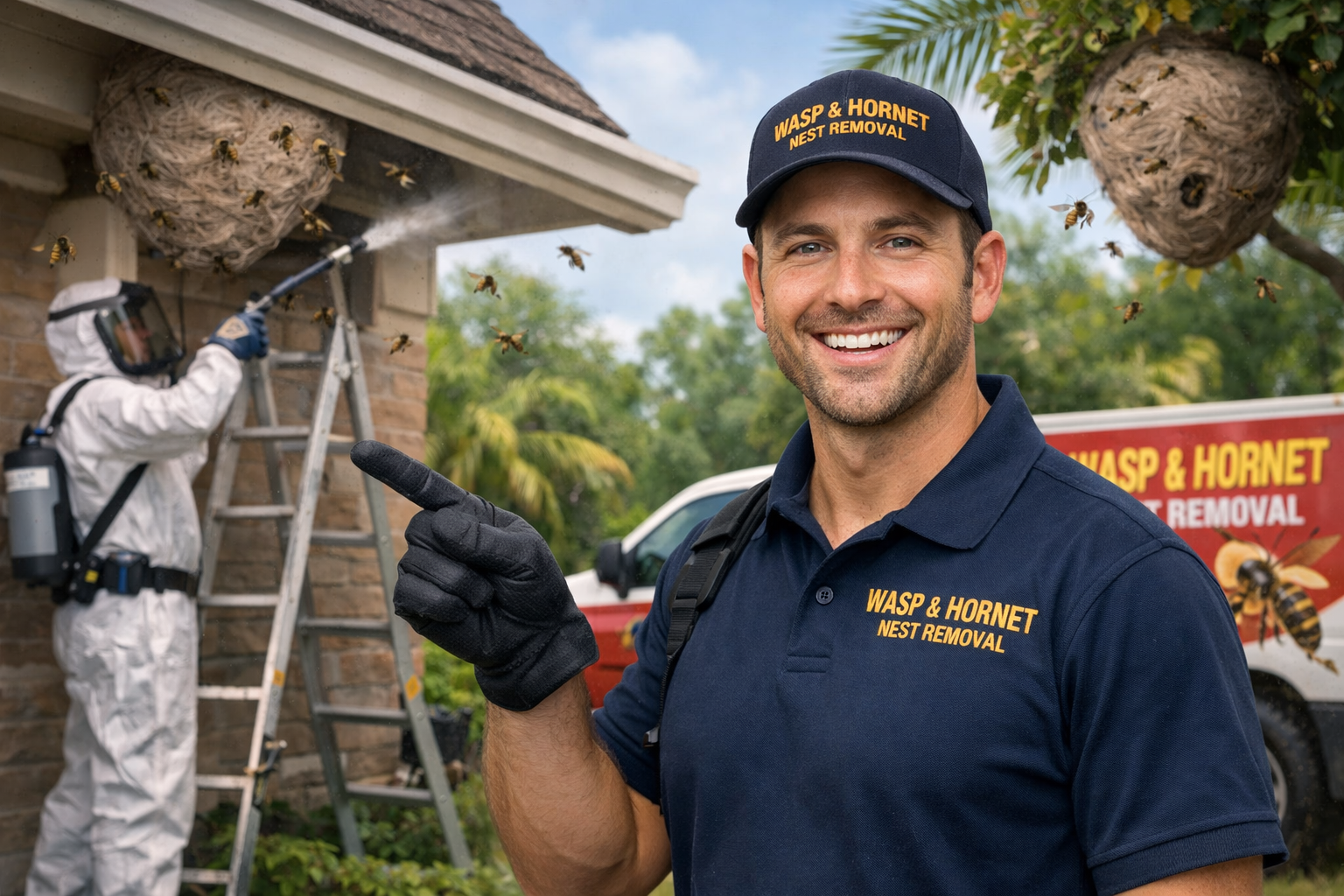
Wasp & Hornet Nest Removal Service Areas in Florida, FL
Wasps and hornets can build nests fast in Florida—under eaves, inside soffits, in bushes, near pools, and around sheds or fence lines. If you’re seeing steady activity around one spot, hearing buzzing in a wall/attic, or spotting a paper nest forming, it’s smart to act early. We connect Florida homeowners with removal guidance and next steps that focus on safety and preventing repeat nesting.
Wasp & Hornet Nest Help Florida Residents Commonly Request
In most cases, the best results come from two things: removing the active nest safely and reducing the factors that attract repeat activity (easy shelter + food sources). Here are the most common nest situations we help with across Florida.
Nest Location Check & Risk Review
We help identify where the nest is (eaves, soffits, bushes, wall voids, attic edges) and what makes it higher-risk— like entrances near doors, play areas, or high foot traffic.
Active Wasp Nest Removal (Exterior)
Paper nests under roofs, patio covers, and outdoor structures are common. A removal plan focuses on timing, safe access, and limiting stings while eliminating the nest.
Hornet Activity & Aggressive Behavior
Hornets can defend their nest more aggressively. We guide you on what to avoid, safe distance, and how to handle nests around trees, eaves, or outbuildings.
Buzzing in Walls / Soffits
If you hear buzzing behind drywall, in vents, or soffits, the nest may be inside a void. These situations need a careful plan to avoid driving insects into living spaces.
Yard & Bush Nests
Shrubs, hedges, and low branches can hide nests until you get too close. We share practical signs to look for and how to keep kids/pets away until removal is handled.
Prevention After Removal
Prevention focuses on sealing small gaps, reducing attractive nesting spots, and managing outdoor food sources (trash, pet food, fallen fruit) that bring wasps back.
Seasonal Nest Growth Planning
Nests often grow quickly as seasons warm and food increases. We help set up a simple check routine—especially around patios, eaves, and sheds—so nests are handled early.
Safer Steps for Families & Pets
If someone has a sting allergy or you have pets and kids, we prioritize avoidance guidance and safe treatment placement so removal is targeted and controlled.
Common Signs of a Nest (And Safety Tips That Prevent Stings)
A single wasp flying by doesn’t always mean a nest—but repeated traffic to one spot usually does. If you’re unsure, it’s best to keep distance and confirm the nest location before trying anything.
Frequent Insect “Traffic” to One Spot
If you see wasps or hornets repeatedly flying in and out of the same crack, soffit edge, or bush area, there’s likely an active nest nearby.
Paper Nest Under Eaves or Patio Covers
Many wasp nests look like gray/tan paper with open cells. Early nests are small; mature nests can grow quickly and become more defensive.
Buzzing From Walls, Vents, or Attic Edges
Buzzing can indicate nesting in a wall void. Avoid sealing openings without a plan—trapping insects can push them indoors.
More Aggression Near a Specific Area
If wasps seem “angry” when you step near a corner, hedge, or shed, you may be close to a defended nest. Back away slowly and keep others away.
What Not to Do
Avoid knocking nests down, using open flame, or spraying randomly at mid-day. Sudden disturbance can trigger a swarm response and increase sting risk.
Quick Safety Steps
Keep kids/pets away, close nearby doors/windows, and pause outdoor work around the area. If anyone has allergy history, prioritize professional help.
What to Do First if You Find a Wasp or Hornet Nest
These steps help you avoid stings and keep the situation from getting worse while you arrange safe removal.
1) Keep Distance & Mark the Area
Don’t stand under the nest or in the flight path. Keep people and pets away and avoid lawn work or trimming near the site.
2) Confirm the Nest Location
From a safe distance, watch where insects fly in and out. This helps determine if the nest is exposed (eaves/bush) or hidden (wall/soffit).
3) Close Nearby Doors/Windows
If the nest is near an entry point, keep doors closed and check window screens—especially if activity is near the kitchen, garage, or attic access.
4) Reduce Attractants
Secure trash lids, remove outdoor food, and avoid sweet drinks outside. Less food activity means fewer wasps hovering around your living areas.
5) Get a Removal Plan (Especially for Hidden Nests)
Hidden nests in walls/soffits need careful handling to avoid driving insects indoors. A plan focuses on targeted treatment and safe access.
Important: If someone in the home has a known sting allergy (or you’re seeing heavy activity), treat it as urgent and avoid DIY attempts.
Our Wasp & Hornet Nest Removal Service Areas in Florida, FL
Search your city or ZIP to find nest removal support in Florida. Each service-area page can include common nesting spots, what to watch for, and simple prevention tips for your property.
Need Help Removing a Wasp or Hornet Nest?
If nests keep forming around eaves, patios, sheds, or landscaping, don’t wait until activity gets heavy. A safe removal plan can reduce stings, stop the nest from growing, and help prevent repeat nesting on your property.